
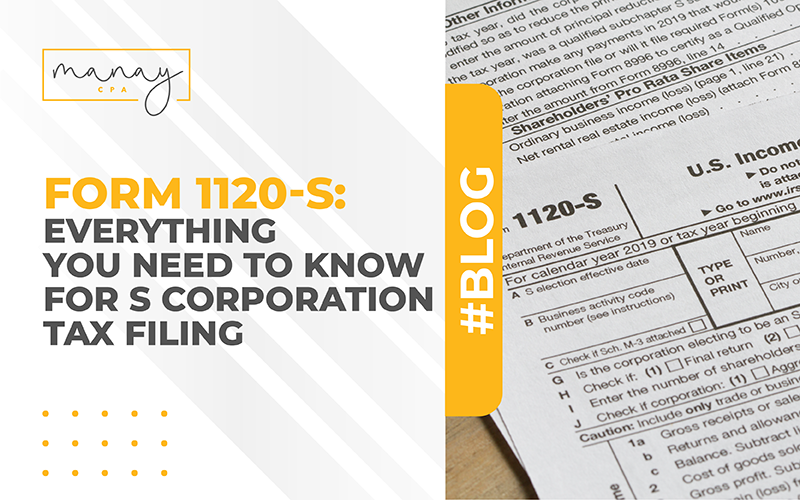
S-Corporations are one of the most popular business structures in the United States, and for good reason—they combine the liability protection of a corporation with the tax advantages of a pass-through entity. But those benefits come with strict compliance requirements. Every S-Corp must file Form 1120-S, U.S. Income Tax Return for an S Corporation, with the IRS each year, and missing the deadline triggers penalties of $255 per shareholder for every month the return is late. For a three-shareholder S-Corp that files just four months behind schedule, the penalty reaches $3,060 before interest even begins to accrue.
Form 1120-S is primarily an information return. The S-Corporation itself generally does not pay federal income tax at the entity level. Instead, income, deductions, credits, and other tax items pass through to each shareholder, who reports their allocated share on a personal Form 1040 and pays tax at their own individual rate. Each shareholder receives a Schedule K-1 (Form 1120-S) detailing their share of the corporation’s results.
For the 2025 tax year, calendar-year S-Corporations must file Form 1120-S by March 16, 2026 (the usual March 15 deadline falls on a Sunday). An automatic six-month extension is available through Form 7004, pushing the extended deadline to September 15, 2026. Beyond timely filing, one of the biggest compliance issues facing S-Corp owners is reasonable compensation—the IRS closely scrutinizes shareholder-employees who pay themselves too little in wages to avoid payroll taxes.
This guide covers everything you need to know about Form 1120-S: what it is and how S-Corp taxation works, step-by-step filing instructions, the reasonable compensation requirement, 2026 deadlines and penalties, Schedule K-1 preparation, shareholder basis tracking with Form 7203, extension options, and common filing mistakes. Whether you recently elected S-Corp status through the LLC-to-S-Corp conversion process or have been filing for years, this is the comprehensive resource you need.
What Is Form 1120-S?
Form 1120-S, officially titled the U.S. Income Tax Return for an S Corporation, is a federal tax form filed annually with the Internal Revenue Service by corporations that have made a valid S election under Subchapter S of the Internal Revenue Code. The return reports the S-Corporation’s total income, deductions, gains, losses, and credits for the tax year. According to the IRS instructions for Form 1120-S, the form serves as the primary mechanism for the IRS to verify that each shareholder is correctly reporting their share of the corporation’s tax items on their individual returns.
Unlike a C-Corporation that files Form 1120 and pays corporate income tax on its profits, an S-Corporation is a pass-through entity. The corporation calculates its income and deductions on Form 1120-S, but the tax liability passes through to the shareholders. This avoids the double taxation that C-Corporations face, where income is taxed first at the corporate level and again when distributed as dividends to shareholders.
How S-Corp Taxation Works
The S-Corporation files Form 1120-S as an information return, reporting the company’s financial results for the year. Each shareholder then receives a Schedule K-1 showing their pro rata share of income, deductions, and credits based on their stock ownership percentage. Shareholders report these K-1 amounts on their personal Form 1040 and pay tax at their individual income tax rates. One of the most significant advantages of S-Corp taxation is that ordinary business income distributed to shareholders is not subject to self-employment tax. In contrast, general partners in a partnership typically owe self-employment tax on their share of partnership income reported on Form 1065. This distinction is a primary reason many business owners elect S-Corp status. However, shareholder-employees must receive reasonable wages, which are subject to payroll taxes—a requirement the IRS enforces aggressively.
Exceptions: When S-Corps Do Pay Tax
While S-Corporations generally do not pay federal income tax at the entity level, there are a few exceptions that can trigger entity-level taxes:
- Built-in gains tax: If a C-Corporation converts to S-Corp status, the S-Corp may owe tax on the built-in gains in assets that existed at the time of conversion, if those assets are sold within a recognition period.
- Excess net passive income tax: If an S-Corp has accumulated earnings and profits from a prior C-Corp period and more than 25% of its gross receipts come from passive investment income, the excess passive income is subject to corporate tax.
- LIFO recapture tax: If a C-Corporation using the LIFO inventory method converts to S-Corp status, it must include a LIFO recapture amount in income.
These situations are relatively uncommon for S-Corporations that were never C-Corporations, but they are important considerations for businesses that recently converted their entity status. The differences between C-Corps and S-Corps extend well beyond tax treatment and are worth understanding before making any election decisions.
Who Must File Form 1120-S?
Only corporations that have made a valid S election by filing Form 2553, Election by a Small Business Corporation, and had that election accepted by the IRS, are required to file Form 1120-S. To qualify for and maintain S-Corp status, the corporation must meet all of the following requirements:
- Be a domestic corporation (formed in the United States)
- Have 100 or fewer shareholders
- Have only allowable shareholders: individuals who are U.S. citizens or resident aliens, certain trusts, and estates—but not corporations, partnerships, or nonresident aliens
- Have only one class of stock (differences in voting rights are permitted, but all shares must have identical rights to distributions and liquidation proceeds)
- Not be an ineligible corporation, such as certain financial institutions, insurance companies, or domestic international sales corporations
Filing Is Required Even If the S-Corp Had No Activity
Similar to Form 1065 for partnerships, the IRS requires Form 1120-S to be filed even if the S-Corporation had no income, operated at a loss, had no business activity, or had only family members as shareholders. Failure to file in any of these situations triggers the same late-filing penalty that applies to active S-Corporations.
Termination of S-Corp Status
An S election can be terminated voluntarily by the shareholders or involuntarily if the corporation ceases to meet the eligibility requirements—for example, by exceeding 100 shareholders, admitting an ineligible shareholder such as a nonresident alien, or creating a second class of stock. If the S election terminates mid-year, the corporation files Form 1120-S for the short S-Corp period and then files Form 1120 (C-Corporation return) for the remainder of the year and going forward. Once terminated, the corporation generally cannot re-elect S-Corp status for five tax years without IRS consent.
Information You’ll Need Before Filing Form 1120-S
Gathering all required documents before starting Form 1120-S will save time and reduce the risk of errors that trigger IRS notices. The information falls into four categories.
Basic Corporate Information
- Employer Identification Number (EIN)
- Corporation name and address
- Date incorporated and state of incorporation
- Date S election became effective
- Principal business activity code (6-digit NAICS code)
- Accounting method (cash, accrual, or other)
Financial Records
- Gross receipts or sales and returns/allowances
- Cost of goods sold (if applicable)
- All deductible business expenses including rent, utilities, insurance, advertising, and professional fees
- Officer compensation — this is the critical reasonable compensation figure
- Other salaries and wages paid to non-officer employees
- Depreciation schedules for business assets (Form 4562)
- Balance sheet data covering assets, liabilities, and shareholders’ equity at the beginning and end of the year
Shareholder Information
For each shareholder you will need their full legal name, mailing address, Social Security Number, stock ownership percentage, beginning and ending stock basis, distributions made during the year, and any loans to or from the shareholder. Accurate shareholder data is essential because it feeds directly into Schedule K-1 preparation and basis calculations.
Payroll Records
S-Corporations with shareholder-employees must maintain comprehensive payroll records including W-2s issued to shareholder-employees, all payroll tax deposits made during the year, and documentation supporting how reasonable compensation was determined. These records are among the first items the IRS requests during an S-Corp examination.
Form 1120-S Step-by-Step Instructions
This section walks through each major part of Form 1120-S in the order you will complete it. For full line-by-line details, refer to the official IRS Instructions for Form 1120-S. Partnerships that need additional help with preparation should consider working with a professional tax preparer experienced in S-Corp returns.
Page 1: Header and Basic Information
The top of Form 1120-S collects identifying information about the corporation. Line A records the date the S election took effect, Line B is the business activity code, and Line C contains checkboxes for initial return, final return, name change, address change, amended return, or S election termination year. Line E requires total assets from Schedule L, and Line F asks for the total number of shareholders at year-end. The corporation’s name and EIN must match IRS records exactly—any mismatch can delay processing or trigger a notice.
Page 1: Income Section (Lines 1–6)
- Line 1a: Gross receipts or sales
- Line 1b: Returns and allowances
- Line 1c: Net receipts (Line 1a minus Line 1b)
- Line 2: Cost of goods sold (calculated on Form 1125-A)
- Line 3: Gross profit (Line 1c minus Line 2)
- Line 4: Net gain or loss from Form 4797 (sales of business property)
- Line 5: Other income (attach statement)
- Line 6: Total income — the sum of Lines 3 through 5
Page 1: Deductions Section (Lines 7–21)
The deductions section captures all expenses the S-Corporation can deduct against its income. Line 7 — Compensation of Officers — is the most critical line on the entire return because it is where reasonable compensation for shareholder-employees is reported. The IRS pays close attention to this figure relative to the corporation’s total income. Additional deduction lines include salaries and wages to non-officers (Line 8), repairs and maintenance (Line 9), bad debts (Line 10), rents (Line 11), taxes and licenses (Line 12), interest (Line 13), depreciation from Form 4562 (Line 14), advertising (Line 16), pension and profit-sharing plans (Line 17), employee benefit programs (Line 18), and other deductions with an attached statement (Line 19).
Line 20 totals all deductions, and Line 21 calculates ordinary business income (or loss) by subtracting Line 20 from Line 6. This is the core figure that flows through to each shareholder’s Schedule K-1.
Tax and Payments Section (Lines 22–27)
Most S-Corporations will show zero on the tax lines because they do not owe entity-level tax. However, Lines 22a through 22c capture the rare entity-level taxes: excess net passive income tax (Line 22a), built-in gains tax from Schedule D (Line 22b and 22c). Lines 23 through 27 track estimated tax payments, credits, and any amount owed or overpaid.
Schedule B: Other Information
Schedule B contains a series of yes-or-no questions about the S-Corporation’s structure and activities, including the accounting method used, number of shareholders, types of business activity, and whether the corporation has foreign accounts or transactions. Errors on Schedule B are a common trigger for IRS inquiries, so each question should be reviewed carefully.
Schedule K: Shareholders’ Pro Rata Share Items
Schedule K is the summary of all items that pass through to shareholders. It mirrors the income, deduction, and credit categories found on individual Schedule K-1s. The totals on Schedule K must exactly equal the combined totals across all K-1s issued to shareholders—any mismatch will generate an IRS notice.
Schedule L, M-1, and M-2
Schedule L reports the S-Corporation’s balance sheet at the beginning and end of the tax year. Schedule M-1 reconciles the corporation’s book income to its taxable income as reported on Form 1120-S. Schedule M-2 is particularly important for S-Corporations because it tracks the Accumulated Adjustments Account (AAA), the Other Adjustments Account (OAA), and Previously Taxed Income. The AAA determines the tax treatment of distributions to shareholders—distributions from AAA are generally tax-free to the extent of the shareholder’s stock basis, while distributions in excess of AAA may be treated as capital gains. Errors in AAA tracking compound over the years and are one of the most difficult problems to correct retroactively.
Reasonable Compensation: The #1 S-Corp Compliance Issue
If there is one issue that dominates IRS examinations of S-Corporations, it is reasonable compensation. The concept is straightforward: any shareholder who performs services for the S-Corporation must receive wages that are considered reasonable for the work performed. Those wages are subject to Social Security and Medicare payroll taxes, while distributions paid to shareholders above their reasonable wages are not. This creates a natural incentive for shareholder-employees to minimize wages and maximize distributions, which is exactly what the IRS is watching for.
The Tax Savings Temptation
To understand why reasonable compensation matters, consider this example. An S-Corporation earns $150,000 in net profit and has a single shareholder-employee:
| All Salary | Salary + Distribution | |
| W-2 Wages | $150,000 | $60,000 |
| Distribution | $0 | $90,000 |
| Payroll Taxes (15.3%) | ~$18,130* | ~$9,180 |
| Estimated Savings | — | ~$8,950 |
*Social Security tax applies only up to the wage base ($176,100 for 2025). Medicare tax of 2.9% applies to all wages.
The savings are significant, but the IRS can reclassify distributions as wages if the compensation is not considered reasonable. When this happens, the corporation owes back payroll taxes on the reclassified amount, plus penalties for late payroll tax deposits and interest on unpaid amounts.
What the IRS Considers “Reasonable”
According to IRS guidance and court precedent, the IRS evaluates reasonable compensation based on multiple factors:
- Training, experience, and qualifications of the shareholder-employee
- Duties and responsibilities performed
- Time and effort devoted to the business
- Compensation paid by comparable businesses for similar services
- Salary history of the shareholder-employee
- Use of a formula or established compensation policy
- Amounts paid to non-shareholder employees for similar work
- Profitability and revenue of the company
There is no safe harbor percentage or fixed formula. Some advisors reference a 60/40 guideline (60% wages, 40% distributions) as a starting point, but this is not an IRS-approved rule and should not be relied upon without analyzing the specific facts and circumstances of the business.
Best Practices for Reasonable Compensation
- Research comparable salaries in your industry and geographic area using salary surveys and BLS data
- Document in writing how the compensation amount was determined
- Pay regular payroll throughout the year rather than a single year-end lump sum
- Issue a W-2 to every shareholder who provides services, even part-time services
- Work with a CPA to establish and defend appropriate compensation levels
- Review and adjust compensation annually as the business grows
Schedule K-1 (Form 1120-S): Reporting Each Shareholder’s Share
Schedule K-1 (Form 1120-S) is the document each shareholder needs to complete their individual tax return. The S-Corporation prepares one K-1 for every shareholder, files copies with the IRS as part of the Form 1120-S submission, and provides a copy to each shareholder.
K-1 Structure
Part I identifies the S-Corporation (EIN, name, address). Part II identifies the shareholder (SSN, name, address, stock ownership percentage). Part III contains the actual pass-through amounts. The following table shows where key K-1 boxes map on the shareholder’s personal return:
| K-1 Box | Item | Reports To |
| Box 1 | Ordinary business income (loss) | Schedule E, Part II |
| Box 2 | Net rental real estate income (loss) | Schedule E |
| Box 4 | Interest income | Schedule B (Form 1040) |
| Box 5a | Ordinary dividends | Schedule B (Form 1040) |
| Boxes 7–10 | Capital gains and losses | Schedule D, Form 8949 |
| Box 12 | Section 179 deduction | Form 4562 |
| Box 16 | Items affecting shareholder basis | Form 7203 |
| Box 17 | Other information (including QBI) | Various schedules |
S-Corp K-1 vs. Partnership K-1
Although the K-1 forms for S-Corporations and partnerships look similar, they carry different tax implications. The most important distinction is that S-Corp K-1 income is not subject to self-employment tax, while partnership K-1 income for general partners typically is. S-Corp shareholders also have different basis tracking requirements, using Form 7203 instead of the partnership basis worksheet. The Qualified Business Income (QBI) deduction applies to both types of pass-through entities, but the reasonable compensation paid to S-Corp shareholder-employees reduces the amount eligible for the QBI deduction.
Shareholder Basis Tracking (Form 7203)
S-Corporation shareholders are required to track their stock and debt basis using Form 7203, S Corporation Shareholder Stock and Debt Basis Limitations. Basis determines how much of an S-Corp loss a shareholder can deduct, the tax treatment of distributions (tax-free return of capital vs. capital gain), and the gain or loss on disposition of S-Corp stock. Form 7203 must be filed with the shareholder’s personal return if the shareholder is claiming a deduction for an S-Corp loss, received a non-dividend distribution, disposed of S-Corp stock, or received a loan repayment from the S-Corporation.
K-1 Deadline and Penalties
Schedule K-1 must be provided to each shareholder by the Form 1120-S due date—March 16, 2026 for calendar-year S-Corporations filing the 2025 tax year return. The penalty for failing to furnish a K-1 on time is $330 per K-1 for the 2025 tax year. If the S-Corporation intentionally disregards the requirement, the penalty increases to $660 per K-1. Late K-1s create a cascading problem: shareholders cannot complete their personal returns without K-1 information, which often forces them to file personal extensions as well.
Form 1120-S Due Date and Late Filing Penalties
2026 Filing Deadlines
The general rule is that Form 1120-S is due on the 15th day of the 3rd month following the close of the S-Corporation’s tax year. If the due date falls on a Saturday, Sunday, or legal holiday, the deadline moves to the next business day.
| Tax Year Ending | Original Due Date | Extended Due Date |
| December 31, 2025 | March 16, 2026* | September 15, 2026 |
| June 30, 2026 | September 15, 2026 | March 15, 2027 |
*March 15, 2026 falls on a Sunday, so the deadline moves to Monday, March 16, 2026.
Late Filing Penalties
Under IRC Section 6699, the IRS imposes a failure-to-file penalty on S-Corporations that do not file Form 1120-S by the due date (including extensions). For returns required to be filed in 2026, the penalty is $255 per shareholder per month (or partial month) that the return is late, for a maximum of 12 months. This penalty applies even if the S-Corporation had no income, operated at a loss, or owes no entity-level tax.
Penalty Calculation Examples:
| Scenario | Shareholders | Months Late | Total Penalty |
| 2-shareholder S-Corp | 2 | 3 months | $1,530 |
| 5-shareholder S-Corp | 5 | 6 months | $7,650 |
| 3-shareholder S-Corp | 3 | 12 months (max) | $9,180 |
Penalty Relief Options
- First-Time Penalty Abatement (FTA): S-Corporations with a clean compliance history for the prior three tax years may qualify for an automatic waiver of the late-filing penalty.
- Reasonable Cause: If circumstances beyond the corporation’s control prevented timely filing—such as a natural disaster, death or serious illness of a key officer, or destruction of records—the IRS may waive the penalty.
Cascading Effect on Shareholders
When Form 1120-S is filed late, K-1s are also delayed. Shareholders who have not received their K-1s cannot complete their personal tax returns, forcing them to file personal tax extensions. If shareholders fail to make adequate estimated tax payments by the original deadline, they may face their own underpayment penalties on their personal returns. This cascading effect means that a single missed S-Corp filing deadline can create tax problems across every shareholder’s personal return.
How to Get an Extension (Form 7004)
S-Corporations that need additional time to file can request an automatic six-month extension by filing Form 7004 by the original due date (March 16, 2026 for calendar-year S-Corps). No explanation or justification is required—the extension is granted automatically as long as Form 7004 is filed on time. The extension pushes the filing deadline to September 15, 2026. Form 7004 can be filed electronically through IRS-approved e-file software.
It is important to understand that Form 7004 extends only the time to file, not the time to pay. While most S-Corporations do not owe entity-level tax, any applicable taxes (such as built-in gains tax or excess passive income tax) are still due by the original deadline. When Form 1120-S is extended, the K-1 deadline extends as well, but shareholders who need K-1 data for their April 15 personal filing may need to request individual extensions.
How to File Form 1120-S
Electronic Filing
The IRS strongly encourages electronic filing and makes it mandatory for S-Corporations that file 10 or more returns of any type during the calendar year, as well as S-Corporations with more than 100 shareholders. Electronic filing provides faster processing, immediate confirmation of receipt, and lower error rates compared to paper filing. S-Corporations can e-file using IRS-approved tax preparation software or through a qualified tax professional who uses the IRS Modernized e-File (MeF) system.
Paper Filing
S-Corporations that are not required to e-file may submit a paper return by mailing it to the applicable IRS Service Center based on the corporation’s principal place of business. Using certified mail with a return receipt provides proof of timely filing, which is essential if the filing date is ever questioned. Paper returns take significantly longer to process than electronically filed returns.
Who Can Sign Form 1120-S
Form 1120-S must be signed by the president, vice president, treasurer, assistant treasurer, chief accounting officer, or any other corporate officer authorized to sign. An unsigned return is treated as if it was never filed, which means penalties begin accruing from the original due date. If a paid preparer completed the return, they must also sign and include their Preparer Tax Identification Number (PTIN).
Required Schedules and Attachments
In addition to the main Form 1120-S, S-Corporations may need to include several supplementary forms and schedules depending on their activities during the tax year:
| Form / Schedule | Purpose |
| Schedule K-1 | Required for every shareholder — reports each shareholder’s pro rata share |
| Form 1125-A | Cost of Goods Sold (if applicable) |
| Form 1125-E | Compensation of Officers — required if total receipts are $500,000 or more |
| Form 4562 | Depreciation and Amortization |
| Form 4797 | Sales of Business Property |
| Schedule D | Capital Gains and Losses |
| Schedule K-2 / K-3 | International items (foreign income, credits, withholding) |
| Form 7203 | Shareholder Stock and Debt Basis Limitations (filed by shareholder) |
Form 1125-E is particularly noteworthy because it provides a detailed breakdown of officer compensation—information the IRS uses when evaluating reasonable compensation. S-Corporations with total receipts of $500,000 or more must file this form, and it requires disclosing each officer’s name, SSN, ownership percentage, and compensation amount.
Common Form 1120-S Filing Mistakes to Avoid
S-Corp returns are complex, and certain errors appear repeatedly in IRS examinations and common tax filing mistakes data. Here are the most frequent problems to watch for:
- Not paying reasonable compensation. This is the single biggest IRS audit trigger for S-Corporations. Taking only distributions and paying zero or minimal wages is a red flag that almost guarantees scrutiny.
- Missing the March 15 deadline. The S-Corp filing deadline is a full month earlier than the April 15 personal return deadline. Many first-time filers confuse the two dates, and penalties accrue immediately.
- Incorrect stock ownership percentages. K-1 ownership percentages must reflect actual ownership and total exactly 100%. Any discrepancy generates an automated IRS notice.
- Not issuing K-1s to shareholders. There is a separate $330-per-K-1 penalty for failure to furnish on time, on top of the late-filing penalty for the return itself.
- Failing to track AAA properly. Errors in the Accumulated Adjustments Account affect the tax treatment of every distribution and compound over the years. Correcting AAA errors retroactively is expensive and time-consuming.
- Not filing when the S-Corp had no activity. Even a dormant S-Corporation must file Form 1120-S. Failure to file triggers the same per-shareholder, per-month penalty regardless of income.
- Violating S-Corp eligibility requirements. Exceeding 100 shareholders, admitting an ineligible shareholder, or creating a second class of stock can involuntarily terminate the S election, triggering different filing obligations and potential back taxes.
How Manay CPA Can Help With Your S-Corp Return
S-Corporation tax compliance involves unique challenges that go beyond standard tax preparation—especially the reasonable compensation determination that can trigger IRS scrutiny if handled incorrectly. Manay CPA provides comprehensive S-Corp tax services designed to keep your business in compliance:
- Complete Form 1120-S preparation and electronic filing
- Schedule K-1 preparation and distribution for all shareholders
- Reasonable compensation analysis with documented support
- Shareholder basis tracking and Form 7203 assistance
- Multi-state tax filing compliance for S-Corps operating across state lines.
- Year-round S-Corp tax planning and payroll tax compliance
- S-Corp election evaluation and entity structure optimization
Don’t risk IRS problems with your S-Corporation. Schedule a free consultation with Manay CPA today to ensure your return is filed accurately, on time, and with defensible reasonable compensation documentation.
Frequently Asked Questions About Form 1120-S
What is Form 1120-S?
Form 1120-S is the U.S. Income Tax Return for an S Corporation. S-Corps use it to report income, deductions, gains, losses, and credits to the IRS. It is primarily an information return because S-Corps generally do not pay federal income tax at the entity level—instead, shareholders report their share on personal returns using Schedule K-1.
When is Form 1120-S due for the 2025 tax year?
For calendar-year S-Corporations with a tax year ending December 31, 2025, Form 1120-S is due March 16, 2026. The usual March 15 deadline falls on a Sunday, so the due date moves to the following Monday. Fiscal-year S-Corps must file by the 15th day of the third month after their tax year ends.
Does an S-Corp pay income tax?
Generally, no. S-Corps are pass-through entities. The corporation files Form 1120-S to report its financial activity, but shareholders pay tax on their individual shares. Rare exceptions include built-in gains tax (for former C-Corps) and excess net passive income tax.
What is the penalty for filing Form 1120-S late?
For returns required to be filed in 2026, the penalty is $255 per shareholder per month (or partial month) the return is late, for up to 12 months. For example, a three-shareholder S-Corp filed four months late would owe $3,060 ($255 × 3 × 4). This penalty applies even if the S-Corp had no income and owes no tax.
What is ‘reasonable compensation’ for S-Corp shareholders?
Reasonable compensation is the amount a shareholder-employee should be paid in wages for the services they provide to the S-Corporation. The IRS requires this because wages are subject to payroll taxes while distributions are not. Paying too-low wages to avoid payroll taxes can result in IRS reclassification of distributions as wages, triggering back taxes, penalties, and interest.
What happens if I don’t pay myself reasonable compensation?
The IRS can reclassify your distributions as wages, requiring the S-Corporation to pay back payroll taxes on the reclassified amount (both the employer and employee portions of Social Security and Medicare taxes), plus penalties for late payroll tax deposits and interest on unpaid amounts.
Is S-Corp income subject to self-employment tax?
No. Unlike partnership income for general partners, S-Corp income reported on Schedule K-1 is not subject to self-employment tax. However, shareholder-employees must receive reasonable wages, which are subject to payroll taxes (Social Security and Medicare). This distinction is one of the primary tax advantages of S-Corp status.
What is Form 7203?
Form 7203, S Corporation Shareholder Stock and Debt Basis Limitations, is used to track a shareholder’s basis in S-Corp stock and any debt the S-Corp owes to the shareholder. It must be filed with the shareholder’s personal return when claiming a loss deduction, receiving non-dividend distributions, disposing of stock, or receiving loan repayments from the S-Corporation.
Sources and References
- IRS Form 1120-S (2025) — U.S. Income Tax Return for an S Corporation
- IRS Instructions for Form 1120-S (2025) — Official IRS Instructions
- IRS Schedule K-1 (Form 1120-S) — Shareholder’s Share of Income, Deductions, Credits
- IRS Shareholder’s Instructions for Schedule K-1 (Form 1120-S) — Instructions for Shareholders
- IRS Form 7203 and Instructions — S Corporation Shareholder Stock and Debt Basis Limitations
- IRC Section 6699 — Penalty for Failure to File S Corporation Return
- IRS Fact Sheet FS-2008-25 — S-Corporation Reasonable Compensation
- IRS Publication 541 — Partnerships — Comparison Reference
[vc_empty_space height=”20px”][vc_raw_html]JTNDZGl2JTIwY2xhc3MlM0QlMjJocy1jdGEtZW1iZWQlMjBocy1jdGEtZW1iZWQtMTI1Mzk3MjM5NDE4JTIyJTIwc3R5bGUlM0QlMjJtYXgtd2lkdGglM0ExMDAlMjUlM0IlMjBtYXgtaGVpZ2h0JTNBMTAwJTI1JTNCJTIwd2lkdGglM0E3MDBweCUzQmhlaWdodCUzQTM4MS41OTM3NXB4JTIyJTNFJTBBJTIwJTIwJTNDbGluayUyMHJlbCUzRCUyMnN0eWxlc2hlZXQlMjIlMjBocmVmJTNEJTIyaHR0cHMlM0ElMkYlMkZqcy5oc2N0YS5jb20lMkZlbWJlZGRhYmxlX2N0YV9wbGFjZWhvbGRlcl92MS5jc3MlMjIlM0UlMEElMjAlMjAlM0NkaXYlMjBjbGFzcyUzRCUyMmhzLWN0YS1sb2FkaW5nLWRvdF9fY29udGFpbmVyJTIyJTNFJTBBJTIwJTIwJTIwJTIwJTIwJTNDZGl2JTIwY2xhc3MlM0QlMjJocy1jdGEtbG9hZGluZy1kb3QlMjIlM0UlM0MlMkZkaXYlM0UlMEElMjAlMjAlMjAlMjAlMjAlM0NkaXYlMjBjbGFzcyUzRCUyMmhzLWN0YS1sb2FkaW5nLWRvdCUyMiUzRSUzQyUyRmRpdiUzRSUwQSUyMCUyMCUyMCUyMCUyMCUzQ2RpdiUyMGNsYXNzJTNEJTIyaHMtY3RhLWxvYWRpbmctZG90JTIyJTNFJTNDJTJGZGl2JTNFJTBBJTIwJTIwJTNDJTJGZGl2JTNFJTBBJTIwJTIwJTNDZGl2JTIwY2xhc3MlM0QlMjJocy1jdGEtZW1iZWRfX3NrZWxldG9uJTIyJTNFJTNDJTJGZGl2JTNFJTBBJTIwJTIwJTNDcGljdHVyZSUzRSUwQSUyMCUyMCUyMCUyMCUzQ3NvdXJjZSUyMHNyY3NldCUzRCUyMmRhdGElM0FpbWFnZSUyRmdpZiUzQmJhc2U2NCUyQ1IwbEdPRGxoQVFBQkFBQUFBQ0g1QkFFS0FBRUFMQUFBQUFBQkFBRUFBQUlDVEFFQU93JTNEJTNEJTIyJTIwbWVkaWElM0QlMjIlMjhtYXgtd2lkdGglM0ElMjA0ODBweCUyOSUyMiUyMCUyRiUzRSUwQSUyMCUyMCUyMCUyMCUzQ2ltZyUyMGFsdCUzRCUyMk5lZWQlMjBNb3JlJTIwSW5mb3JtYXRpb24lM0YlMjAlRjAlOUYlOTMlOUUlMjIlMjBsb2FkaW5nJTNEJTIybGF6eSUyMiUyMHNyYyUzRCUyMmh0dHBzJTNBJTJGJTJGbm8tY2FjaGUuaHVic3BvdC5jb20lMkZjdGElMkZkZWZhdWx0JTJGNjg1NTY3NCUyRmludGVyYWN0aXZlLTEyNTM5NzIzOTQxOC5wbmclMjIlMjBzdHlsZSUzRCUyMmhlaWdodCUzQSUyMDEwMCUyNSUzQiUyMHdpZHRoJTNBJTIwMTAwJTI1JTNCJTIwb2JqZWN0LWZpdCUzQSUyMGZpbGwlMjIlMjBvbmVycm9yJTNEJTIydGhpcy5zdHlsZS5kaXNwbGF5JTNEJTI3bm9uZSUyNyUyMiUyMCUyRiUzRSUwQSUyMCUyMCUzQyUyRnBpY3R1cmUlM0UlMEElM0MlMkZkaXYlM0U=[/vc_raw_html][vc_empty_space height=”20px”][vc_column_text]
Maximizing Deductions on Form 1120-S
S corporations can take advantage of several deductions to lower their taxable income. To maximize deductions on Form 1120-S, business owners should consider the following:
- Take advantage of all allowable deductions: Make sure to take advantage of all allowable deductions, including employee salaries, rent, and office expenses.
- Consider depreciation: Business owners can deduct the cost of certain assets over time through depreciation. It can help reduce the corporation’s taxable income.
- Remember start-up costs: Business owners can deduct up to $5,000 in start-up costs in the first year of operation. Any remaining costs can be deducted over 15 years.
- Consider health insurance premiums: S corporation shareholders who own more than 2% of the corporation can deduct their health insurance premiums on their tax returns.
S corporations can generally provide business owners with significant tax advantages. Still, consulting with a certified tax professional is crucial to guarantee you’re utilizing all allowable deductions and abiding by all relevant tax regulations.
Deadlines and Extensions for Form 1120-S
As mentioned, Form 1120-S is due on the 15th day of the third month after your corporation’s tax year ends. However, if you need more time to file, you can request an extension using Form 7004.
Form 7004 allows you to request an automatic six-month extension to file Form 1120-S. However, it’s important to note that an extension of time to file does not extend the time to pay any taxes owed. If you owe taxes, you must pay them by the original due date to avoid penalties and interest.
Calculating S Corporation Income and Losses
Calculating S Corporation gains and losses can be complicated, mainly when multiple shareholders exist. Here’s a basic overview of how S Corporation income and losses are calculated:
- Start with the corporation’s total income for the year
- Subtract any deductible business expenses
- Allocate the remaining income or loss among the corporation’s shareholders based on their percentage of ownership
- Report each shareholder’s share of the corporation’s income or loss on Form 1120-S
Remember that this is a simplified overview, and calculating S Corporation income and losses can be much more complicated in practice.
Reporting Shareholder Information on Form 1120-S
As an S Corporation, you must report each shareholder’s name, address, and share of the corporation’s income, deductions, and credits on Form 1120-S. The IRS uses this information to verify the corporation’s income and losses and ensure that the shareholders report the correct information on their tax returns. If your information needs to be corrected or turned out incomplete, it may delay the processing of your return and result in penalties.
Handling IRS Audits and Penalties for Form 1120-S
If the IRS decides to audit your S Corporation’s Form 1120-S, it must be followed correctly to avoid penalties or fines. Here are some tips for handling an IRS audit:
- Cooperate fully with the IRS
- Provide all necessary documentation and information
- If the audit is complex or you need help responding, seek professional help from a tax professional or accountant.
If the IRS finds that your S Corporation made errors on Form 1120-S, you may be penalized and fined. The penalty amount will depend on the severity of the error, so it’s essential to file your taxes correctly the first time.
Resources for Additional Form 1120-S Assistance
Filing Form 1120-S can be challenging, especially for business owners with limited experience with taxes. Filing Form 1120-S correctly is essential to avoid IRS penalties and ensure your S Corporation stays compliant.
Manay CPA is a reliable resource if you require more assistance with Form 1120-S. In addition to tax preparation and planning, our firm offers various accounting and taxation services. Manay CPA can provide the following service to assist with Form 1120-S:
- Tax planning: Manay CPA may assist you with tax planning by examining your company’s structure, earnings, and expenses to find potential deductions and credits.
- Tax preparation: Manay CPA may prepare and submit Form 1120-S on your behalf, ensuring that all pertinent information is included and the form is submitted accurately and on time. We can also help with various tax schedules and forms.
- Consulting: Manay CPA can offer consulting services for your company, such as assisting you in navigating challenging tax situations or providing guidance on the tax ramifications of business decisions. We can also offer advice on financial planning and business strategy.
Schedule a free consultation with our team today to learn more about S corporation tax filing and receive expert guidance from licensed CPAs. We are here to help you maximize deductions, avoid common mistakes, and ensure compliance with IRS regulations. Click here to schedule your free consultation now. [vc_empty_space height=”20px”][vc_raw_html]JTNDZGl2JTIwY2xhc3MlM0QlMjJocy1jdGEtZW1iZWQlMjBocy1jdGEtZW1iZWQtMTI1Mzk3MjM5NDE4JTIyJTIwc3R5bGUlM0QlMjJtYXgtd2lkdGglM0ExMDAlMjUlM0IlMjBtYXgtaGVpZ2h0JTNBMTAwJTI1JTNCJTIwd2lkdGglM0E3MDBweCUzQmhlaWdodCUzQTM4MS41OTM3NXB4JTIyJTNFJTBBJTIwJTIwJTNDbGluayUyMHJlbCUzRCUyMnN0eWxlc2hlZXQlMjIlMjBocmVmJTNEJTIyaHR0cHMlM0ElMkYlMkZqcy5oc2N0YS5jb20lMkZlbWJlZGRhYmxlX2N0YV9wbGFjZWhvbGRlcl92MS5jc3MlMjIlM0UlMEElMjAlMjAlM0NkaXYlMjBjbGFzcyUzRCUyMmhzLWN0YS1sb2FkaW5nLWRvdF9fY29udGFpbmVyJTIyJTNFJTBBJTIwJTIwJTIwJTIwJTIwJTNDZGl2JTIwY2xhc3MlM0QlMjJocy1jdGEtbG9hZGluZy1kb3QlMjIlM0UlM0MlMkZkaXYlM0UlMEElMjAlMjAlMjAlMjAlMjAlM0NkaXYlMjBjbGFzcyUzRCUyMmhzLWN0YS1sb2FkaW5nLWRvdCUyMiUzRSUzQyUyRmRpdiUzRSUwQSUyMCUyMCUyMCUyMCUyMCUzQ2RpdiUyMGNsYXNzJTNEJTIyaHMtY3RhLWxvYWRpbmctZG90JTIyJTNFJTNDJTJGZGl2JTNFJTBBJTIwJTIwJTNDJTJGZGl2JTNFJTBBJTIwJTIwJTNDZGl2JTIwY2xhc3MlM0QlMjJocy1jdGEtZW1iZWRfX3NrZWxldG9uJTIyJTNFJTNDJTJGZGl2JTNFJTBBJTIwJTIwJTNDcGljdHVyZSUzRSUwQSUyMCUyMCUyMCUyMCUzQ3NvdXJjZSUyMHNyY3NldCUzRCUyMmRhdGElM0FpbWFnZSUyRmdpZiUzQmJhc2U2NCUyQ1IwbEdPRGxoQVFBQkFBQUFBQ0g1QkFFS0FBRUFMQUFBQUFBQkFBRUFBQUlDVEFFQU93JTNEJTNEJTIyJTIwbWVkaWElM0QlMjIlMjhtYXgtd2lkdGglM0ElMjA0ODBweCUyOSUyMiUyMCUyRiUzRSUwQSUyMCUyMCUyMCUyMCUzQ2ltZyUyMGFsdCUzRCUyMk5lZWQlMjBNb3JlJTIwSW5mb3JtYXRpb24lM0YlMjAlRjAlOUYlOTMlOUUlMjIlMjBsb2FkaW5nJTNEJTIybGF6eSUyMiUyMHNyYyUzRCUyMmh0dHBzJTNBJTJGJTJGbm8tY2FjaGUuaHVic3BvdC5jb20lMkZjdGElMkZkZWZhdWx0JTJGNjg1NTY3NCUyRmludGVyYWN0aXZlLTEyNTM5NzIzOTQxOC5wbmclMjIlMjBzdHlsZSUzRCUyMmhlaWdodCUzQSUyMDEwMCUyNSUzQiUyMHdpZHRoJTNBJTIwMTAwJTI1JTNCJTIwb2JqZWN0LWZpdCUzQSUyMGZpbGwlMjIlMjBvbmVycm9yJTNEJTIydGhpcy5zdHlsZS5kaXNwbGF5JTNEJTI3bm9uZSUyNyUyMiUyMCUyRiUzRSUwQSUyMCUyMCUzQyUyRnBpY3R1cmUlM0UlMEElM0MlMkZkaXYlM0U=[/vc_raw_html][vc_empty_space height=”20px”]