


Independent Audit Process with U.S. GAAP: The Trust and Financial Benefits Auditing Provides to Businesses
Independent Audit Process with U.S. GAAP: The Trust and Financial Benefits Auditing Provides to Businesses

Meltem Cerci

Sr. Sales Associate

Begüm Yörür

Accounting Manager

Independent Audit Process with U.S. GAAP: The Trust and Financial Benefits Auditing Provides to Businesses

For businesses operating in the U.S. or planning to enter the American market, financial reporting in compliance with U.S. GAAP standards and the independent audit process are not merely legal requirements — they are critical building blocks for investor confidence, financial transparency, and sustainable growth. Incomplete or improperly conducted audit processes can lead to increased financial risks, loss of investor trust, and weakened strategic decision-making.

In this webinar organized by Manay CPA, we will cover the fundamental stages of independent auditing under the U.S. GAAP framework, the financial and operational benefits auditing provides to businesses, the role of auditing in meeting investor and stakeholder expectations, and how a well-structured audit process adds long-term value to companies. This webinar serves as a guide for businesses operating in the U.S., preparing for investment, or looking to strengthen their financial structure — positioning auditing not just as a compliance obligation, but as a strategic advantage.

Independent Audit Process with U.S. GAAP: The Trust and Financial Benefits Auditing Provides to Businesses

U.S. GAAP-Compliant Financial Reporting Fundamentals

We will cover the core principles of U.S. GAAP standards, how financial statements should be prepared, and the critical points businesses need to pay attention to during the compliance process. Understanding these fundamentals is essential for any company operating in or expanding to the American market.

How Does the Independent Audit Process Work?

We will walk through the planning, fieldwork, reporting, and closing stages of an independent audit, along with the information and documents businesses are expected to provide during the process. Understanding each phase helps companies prepare more effectively and ensures a smoother audit experience.

The Trust and Financial Benefits Auditing Provides to Businesses

Independent auditing is not just a compliance requirement — it contributes to financial transparency, strengthening internal controls, and healthier decision-making processes. We will also discuss investor and stakeholder expectations from audited financial statements, the impact of auditing on company valuation and institutional trust, common mistakes encountered during audit processes, risky areas that lead to audit findings, and how these risks can be managed with real-world examples.

Independent Audit Process with U.S. GAAP: The Trust and Financial Benefits Auditing Provides to Businesses

For Website

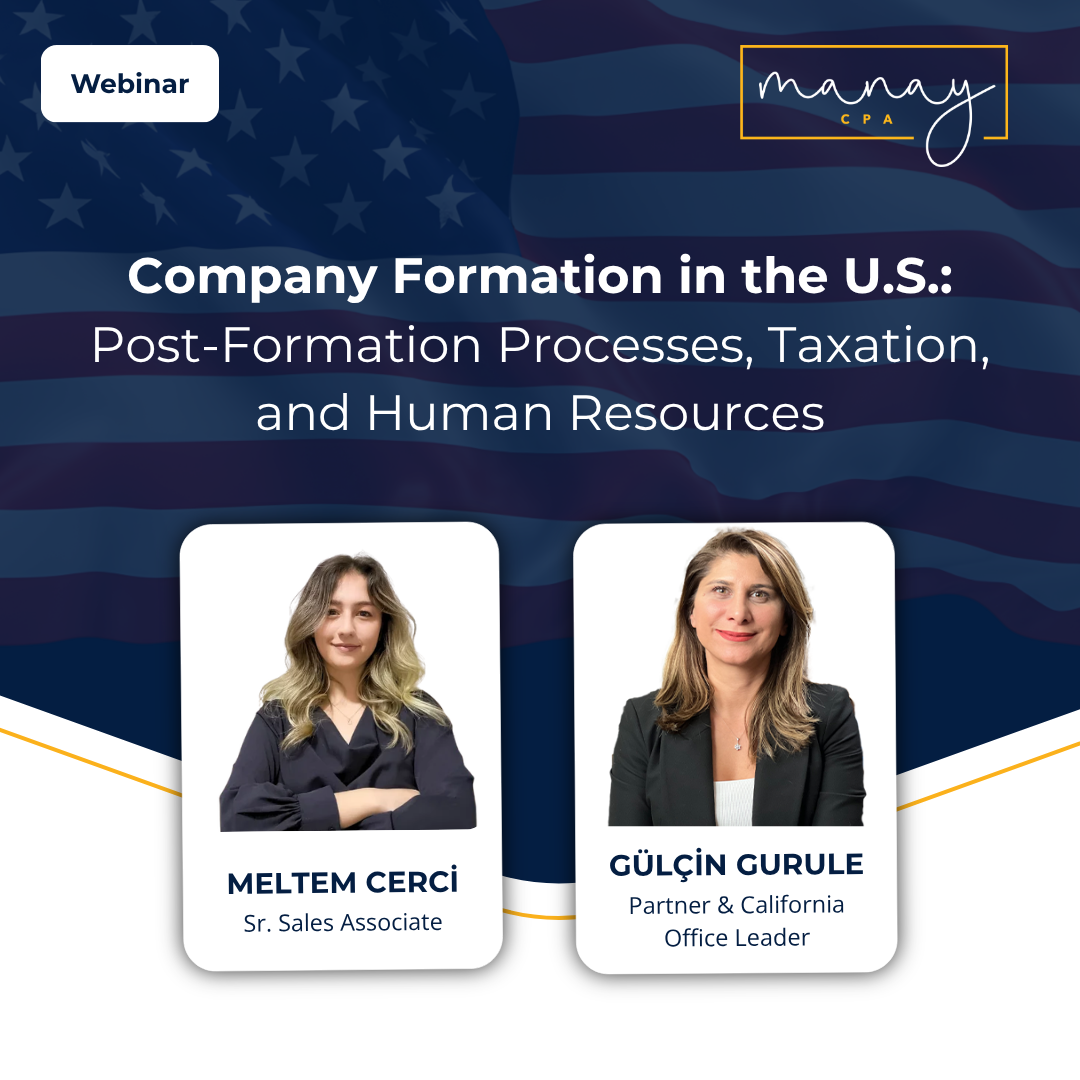
Company Formation in the U.S.: Post-Formation Processes, Taxation, and Human Resources Company Formation in the U.S.: Post-Formation Processes, Taxation, and Human Resources […]
For Website

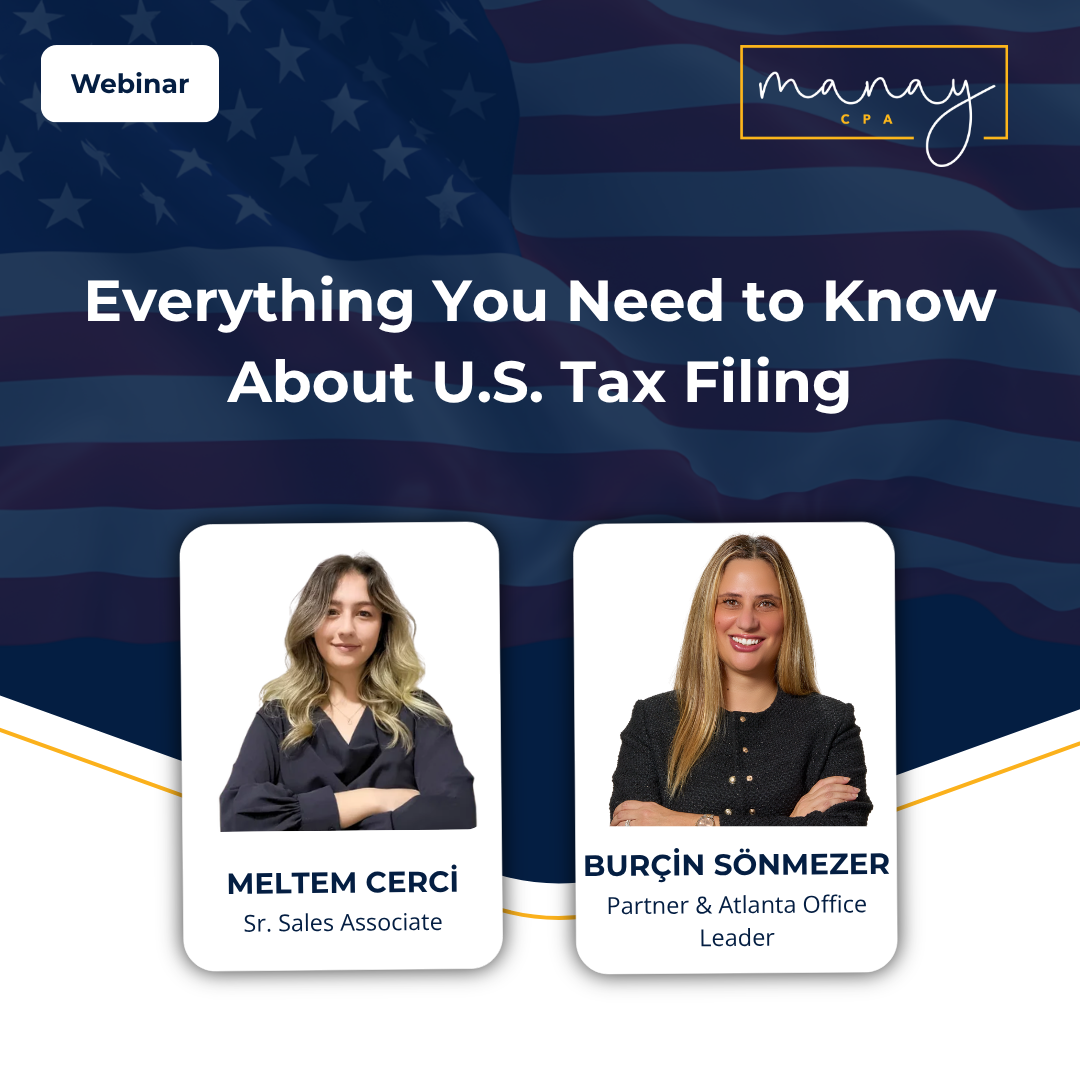
Everything You Need to Know About U.S. Tax Filing Everything You Need to Know About U.S. Tax Filing Meltem Cerci Sr. Sales […]
For Website

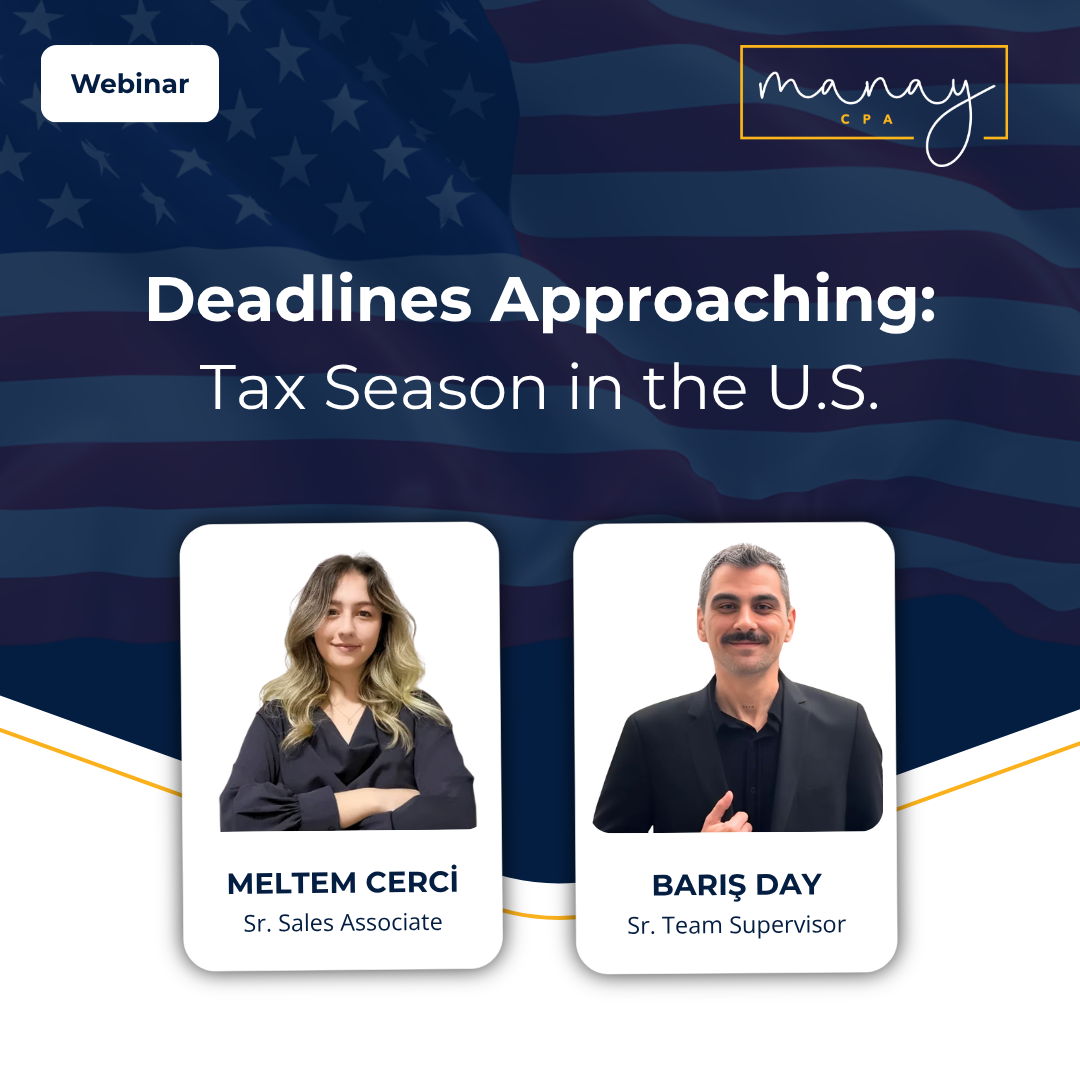
Deadlines Approaching: Tax Season in the U.S. Deadlines Approaching: Tax Season in the U.S. Meltem Cerci Sr. Sales Associate Schedule a Meeting […]

Tax Filing for Multi-Member LLCs and S-Corporations: Critical Steps in the Final Days

Tax Filing for Multi-Member LLCs and S-Corporations: Critical Steps in the Final Days

Meltem Cerci

Sr. Sales Associate

Gunseli Vural

Sr. Accountant

Tax Filing for Multi-Member LLCs and S-Corporations: Critical Steps in the Final Days

As the U.S. tax filing season draws to a close, taking the right steps on time becomes more critical than ever for companies structured as multi-member LLCs and S-Corporations. Incomplete or incorrectly prepared tax returns can lead to serious risks including late filing penalties, additional tax burdens, and compliance issues among partners. In this free live webinar hosted by Manay CPA, we cover the entire tax filing process for multi-partner company structures, explaining which checks need to be completed in the final days, key considerations in partner-based reporting, and common mistakes with clear, practical examples.

If you want to complete the tax season stress-free and in compliance, avoid last-minute surprises, and properly manage the filing process for your multi-partner company, this webinar is designed for you. Whether you are a multi-member LLC owner, an S-Corporation shareholder, or an entrepreneur aiming to minimize tax risks in your partnership structure, join Manay CPA Sr. Accountant Gunseli Vural and moderator Meltem Cerci for expert insights and a live Q&A session.

Tax Filing for Multi-Member LLCs and S-Corporations: Critical Steps in the Final Days

What are the tax filing basics for multi-member LLCs and S-Corporations?

Multi-member LLCs and S-Corporations are pass-through entities, meaning the business itself does not pay income tax. Instead, profits and losses flow through to the individual partners or shareholders, who report them on their personal tax returns. Multi-member LLCs typically file Form 1065 (Partnership Return), while S-Corporations file Form 1120-S. Each partner or shareholder then receives a Schedule K-1 detailing their share of income, deductions, and credits. Understanding these filing requirements and ensuring all forms are submitted correctly and on time is essential to avoid penalties.

What are the most common mistakes in partner-based tax reporting?

One of the most frequent errors in partner-based tax reporting is inaccurate allocation of income and expenses among partners. K-1 forms must accurately reflect each partner’s distributive share based on the partnership or operating agreement. Other common mistakes include failing to report guaranteed payments to partners, incorrect basis calculations, misclassifying self-employment income, and not properly accounting for partner contributions and distributions. These errors can lead to IRS notices, amended return requirements, and potential penalties for both the entity and individual partners.

What last-minute checks should be done before the filing deadline?

In the final days before the filing deadline, it is essential to verify that all financial records are reconciled and accurate. Confirm that all K-1 forms have been prepared and distributed to partners, review estimated tax payments made throughout the year, and ensure all deductions and credits are properly documented. Double-check that the entity’s EIN and all partner SSNs or TINs are correct on all forms. Review the operating or shareholder agreement for any special allocation provisions, and confirm that all state filing requirements are met, as many states have separate deadlines and forms for partnership and S-Corporation returns.

Tax Filing for Multi-Member LLCs and S-Corporations: Critical Steps in the Final Days

For Website

Company Formation in the U.S.: Post-Formation Processes, Taxation, and Human Resources Company Formation in the U.S.: Post-Formation Processes, Taxation, and Human Resources […]

For Website

Everything You Need to Know About U.S. Tax Filing Everything You Need to Know About U.S. Tax Filing Meltem Cerci Sr. Sales […]

For Website

Deadlines Approaching: Tax Season in the U.S. Deadlines Approaching: Tax Season in the U.S. Meltem Cerci Sr. Sales Associate Schedule a Meeting […]

A Guide for Start-Ups Expanding to America: Company Formation, State-Based Tax Advantages, and Investor Readiness

A Guide for Start-Ups Expanding to America: Company Formation, State-Based Tax Advantages, and Investor Readiness

Meltem Cerci

Sr. Sales Associate

Gülçin Gurule

Partner & California Office Lead

A Guide for Start-Ups Expanding to America: Company Formation, State-Based Tax Advantages, and Investor Readiness

For start-ups looking to expand into the U.S. market, taking the right steps at the right time forms the foundation of a successful entry. Critical questions such as which state to incorporate in, how to take advantage of tax benefits, and how to prepare for investor meetings are difficult to answer without a clear roadmap.

In this free live webinar, organized in collaboration with Türkiye İş Bankası and Manay CPA, we cover every aspect of the expansion process for start-ups entering the American market — from company formation and state-based tax advantages to investor readiness and building financial infrastructure. Combining İş Bankası’s global financial expertise with Manay CPA’s U.S. tax and company formation specialization, our experienced professionals walk you through the process step by step with real-world examples and practical insights. If you are planning to establish a company in the U.S., want to determine the most advantageous structure based on state selection, or are preparing for investor rounds, this webinar is for you.

A Guide for Start-Ups Expanding to America: Company Formation, State-Based Tax Advantages, and Investor Readiness

Company Formation in the U.S.: Choosing the Right Structure

Understanding the differences between LLC, C-Corp, and S-Corp structures is essential for start-ups entering the U.S. market. Each entity type offers distinct advantages depending on your business goals, funding strategy, and operational needs. During this segment, we explore which structure is most suitable for start-ups and what to watch out for during the formation process.

State-Based Tax Advantages for Start-Ups

States like Delaware, Wyoming, and Texas offer attractive tax incentives for new businesses. Choosing the right state for incorporation can significantly impact your tax obligations and operational costs. We discuss the tax benefits offered by popular states and help you identify the most advantageous option for your start-up.

Investor Readiness and Special Considerations for Turkish Entrepreneurs

Investors expect a solid financial infrastructure, proper accounting practices, and full legal compliance before committing to a start-up. We cover the financial groundwork investors look for, along with special considerations for Turkish entrepreneurs — including international tax obligations, double taxation treaties, and financial reporting differences between Turkey and the U.S. The session also includes a live Q&A with Manay CPA experts to address your specific questions about expanding to the U.S.

A Guide for Start-Ups Expanding to America: Company Formation, State-Based Tax Advantages, and Investor Readiness

For Website

Company Formation in the U.S.: Post-Formation Processes, Taxation, and Human Resources Company Formation in the U.S.: Post-Formation Processes, Taxation, and Human Resources […]

For Website

Everything You Need to Know About U.S. Tax Filing Everything You Need to Know About U.S. Tax Filing Meltem Cerci Sr. Sales […]

For Website

Deadlines Approaching: Tax Season in the U.S. Deadlines Approaching: Tax Season in the U.S. Meltem Cerci Sr. Sales Associate Schedule a Meeting […]